Coastal Karnataka in 60 Hours: Yana Caves, Gokarna, Murudeshwar and Jog Falls
A 4-day bus trip from Pune through Yana Caves, Gokarna, Murudeshwar, Honnavar's mangroves and Jog Falls — full itinerary, photos and what I'd do differently.

- Dr. Vivek Shilimkar
- 10 min read
On this page
The bus pulled out of Pune at 8:00 PM on the 4th of September, thirty-two of us packed in with backpacks, pillows, and the particular restlessness that comes before a trip you’ve been looking forward to for weeks. Over the next two days we walked into a limestone cave hidden inside basalt hills, watched the sun drop into the Arabian Sea at Gokarna, stood under a 123-foot Shiva at Murudeshwar, crossed a mangrove boardwalk in Honnavar, and stared down four waterfalls falling in unison at Jog. This is that trip — where we went, when, and what I’d change if I did it again.
Day 1: Pune to Yellapur — the overnight haul
- 8:00 PM, Pune — departure. An overnight drive across the Western Ghats, the kind where you wake up every couple of hours to a different shade of dark outside the window.
Day 2: Yana Caves, Gokarna
- 7:15 AM — reached a small restaurant in Yellapur, Shree Krishna Rasoi, for breakfast and a much-needed freshen-up after the night on the road.
- 8:45 AM — set off for Yana Caves, arriving at 10:15 AM.
- Yana Caves, roughly 1 hour 45 minutes on site.
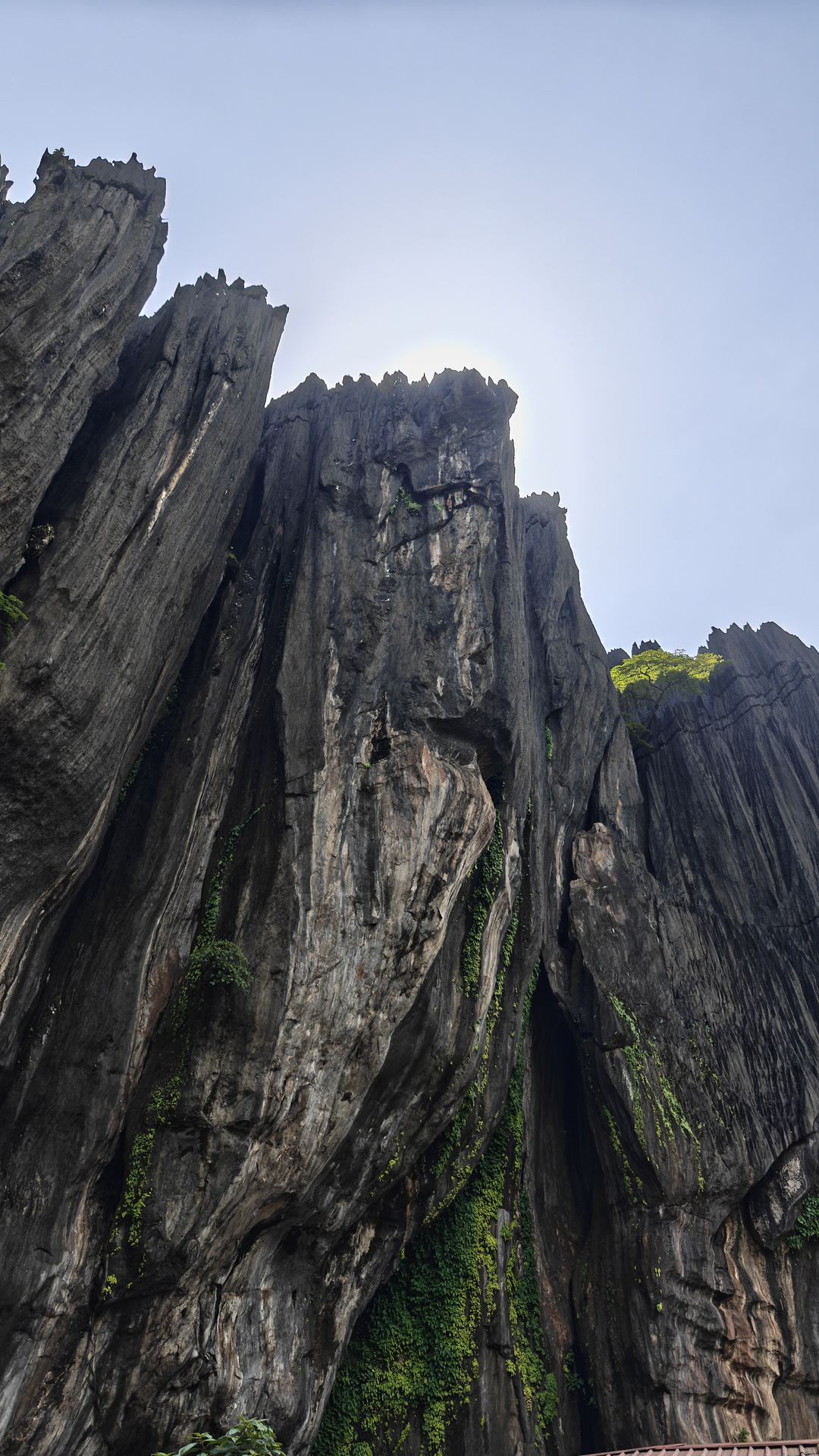
The black limestone spires of Yana, rising out of the forest canopy
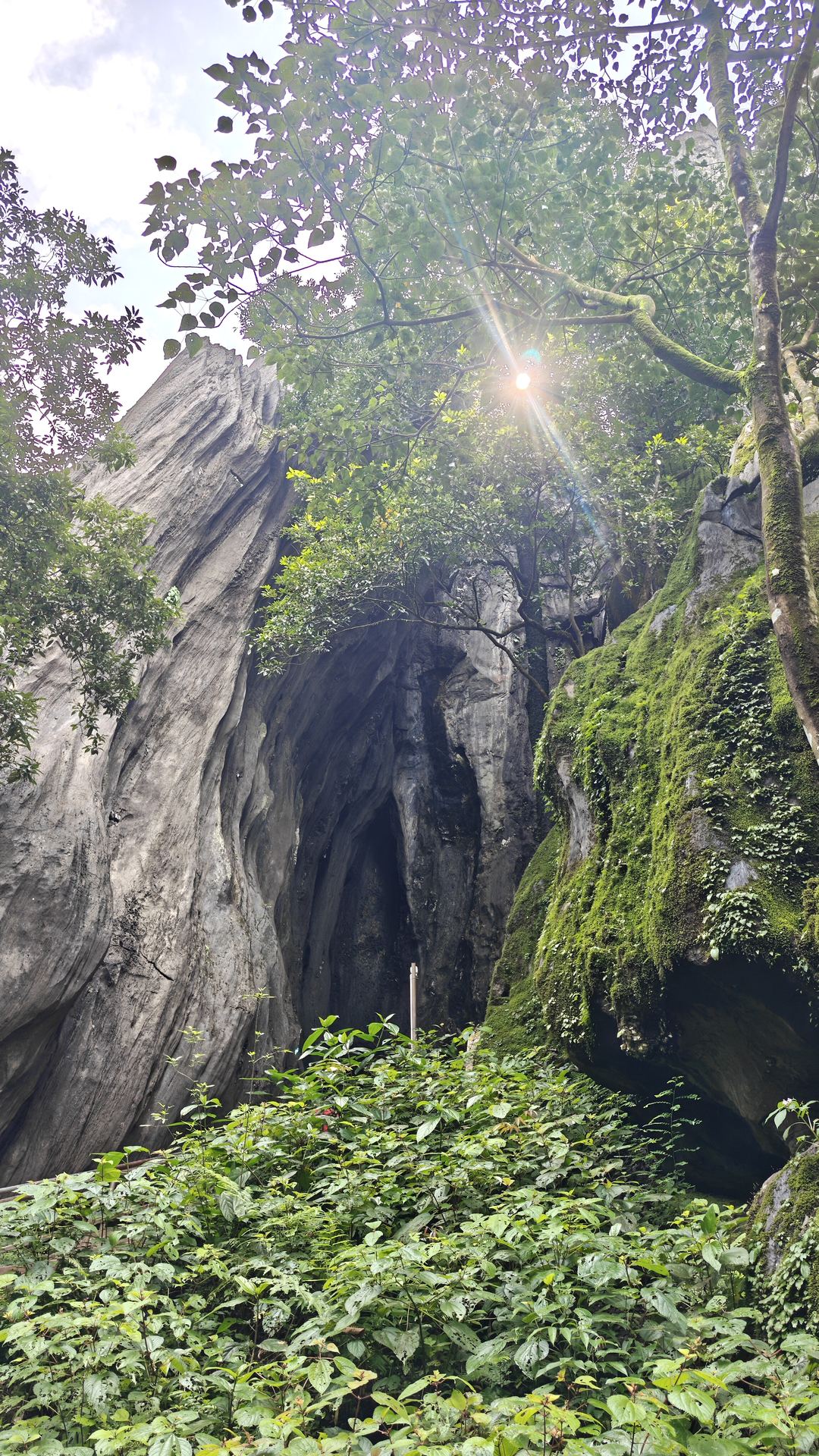
Sunlight breaking through the cave mouth at Yana
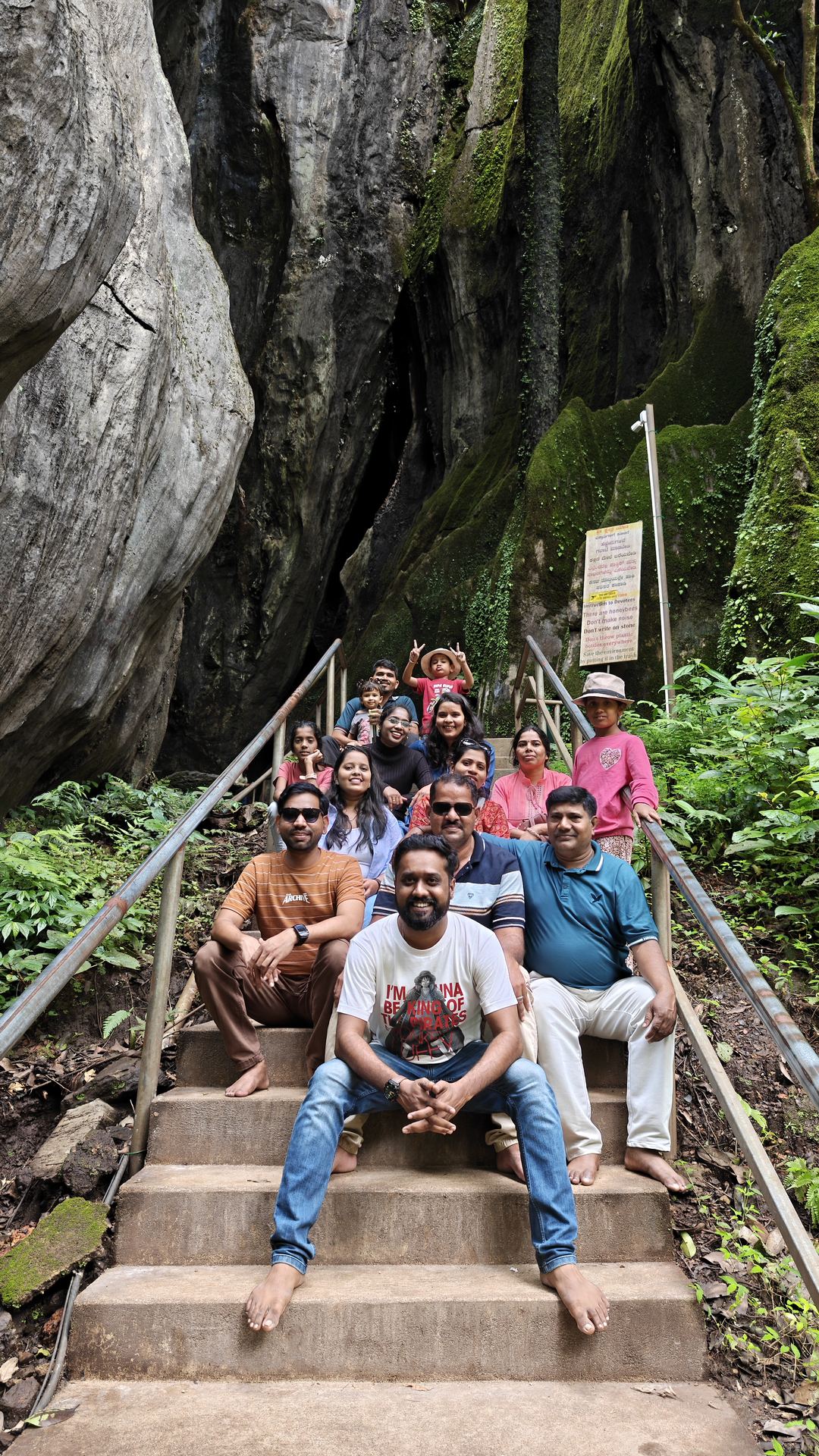
Moss-covered crystalline limestone against the basalt hillside
Nothing quite prepares you for Yana. The Western Ghats here are overwhelmingly basalt — the leftover plumbing of the Deccan volcanic eruptions from around 66 million years ago. And then, out of nowhere, two enormous black spires of crystalline limestone punch through the forest, nearly 90 metres tall. They’re older than the basalt around them, remnants of an ancient limestone deposit that has spent millions of years being dissolved and sculpted by monsoon rainwater — the same slow chemistry that carves marble caves and karst landscapes anywhere in the world, just doing its work in the middle of a rainforest instead of a desert.
It’s the kind of rock formation that looks deliberately built, so it’s no surprise the larger spire is worshipped as the Bhairaveshwara Shikhara, tied to local legends of Bhasmasura and Lord Shiva. Geology gave the place its shape; a few thousand years of storytelling gave it a personality. Standing at the base looking up, I can see why someone once decided a demon lived in there — I just prefer the version where it was groundwater and time.
A climate scientist’s aside: limestone like this is essentially locked-up carbon — calcium carbonate that formed from marine organisms hundreds of millions of years ago and has sat here ever since. Caves like Yana also carry a quieter kind of record: as rainwater drips through the rock, it slowly deposits mineral layers (stalactites and stalagmites) whose chemistry changes with each year’s monsoon. Scientists read these deposits the way you’d read tree rings, reconstructing centuries of rainfall history from a single formation. Yana hasn’t been used that way, as far as I know, but plenty of similar caves elsewhere in India have, and it’s a nice reminder that the ground under our feet is often still quietly taking notes.
- Travelled on to Gokarna, reaching MG Cottages and Dormitories at 1:35 PM.
- Rested until 5:00 PM.
MG Cottages and Dormitories turned out to be a good base — simple rooms, but the food at their in-house restaurant was genuinely good, easily better than we expected from a dormitory-style stay. The beer was priced like it had travelled to Gokarna by air freight, but after a night bus and a morning at Yana, nobody at the table was doing that math too carefully.
- Visited Mahabaleshwar Temple and Mahaganpati Temple.
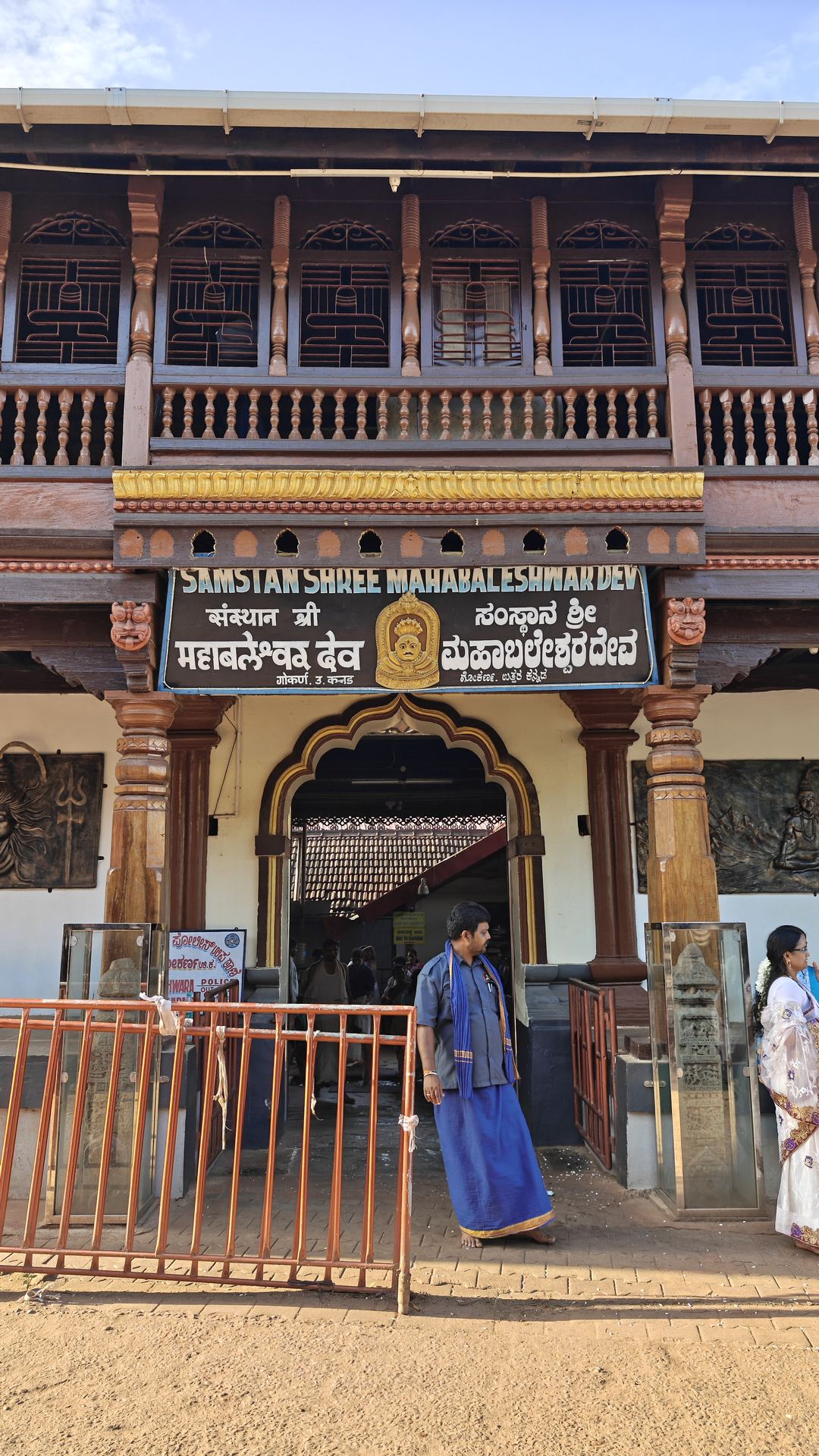
Mahabaleshwar Temple, Gokarna
Mahabaleshwar Temple is the reason Gokarna is a pilgrimage town as much as a beach town. It houses the Atmalinga — in local legend, the very Shiva lingam Ravana was tricked into setting down on this ground by Ganesha, after which it fused permanently into the earth and could never be lifted again. Whatever you make of the story, the temple itself is a fine piece of Kadamba-era Dravidian architecture, and the steady stream of pilgrims moving through gives it a rhythm you can feel just standing outside.
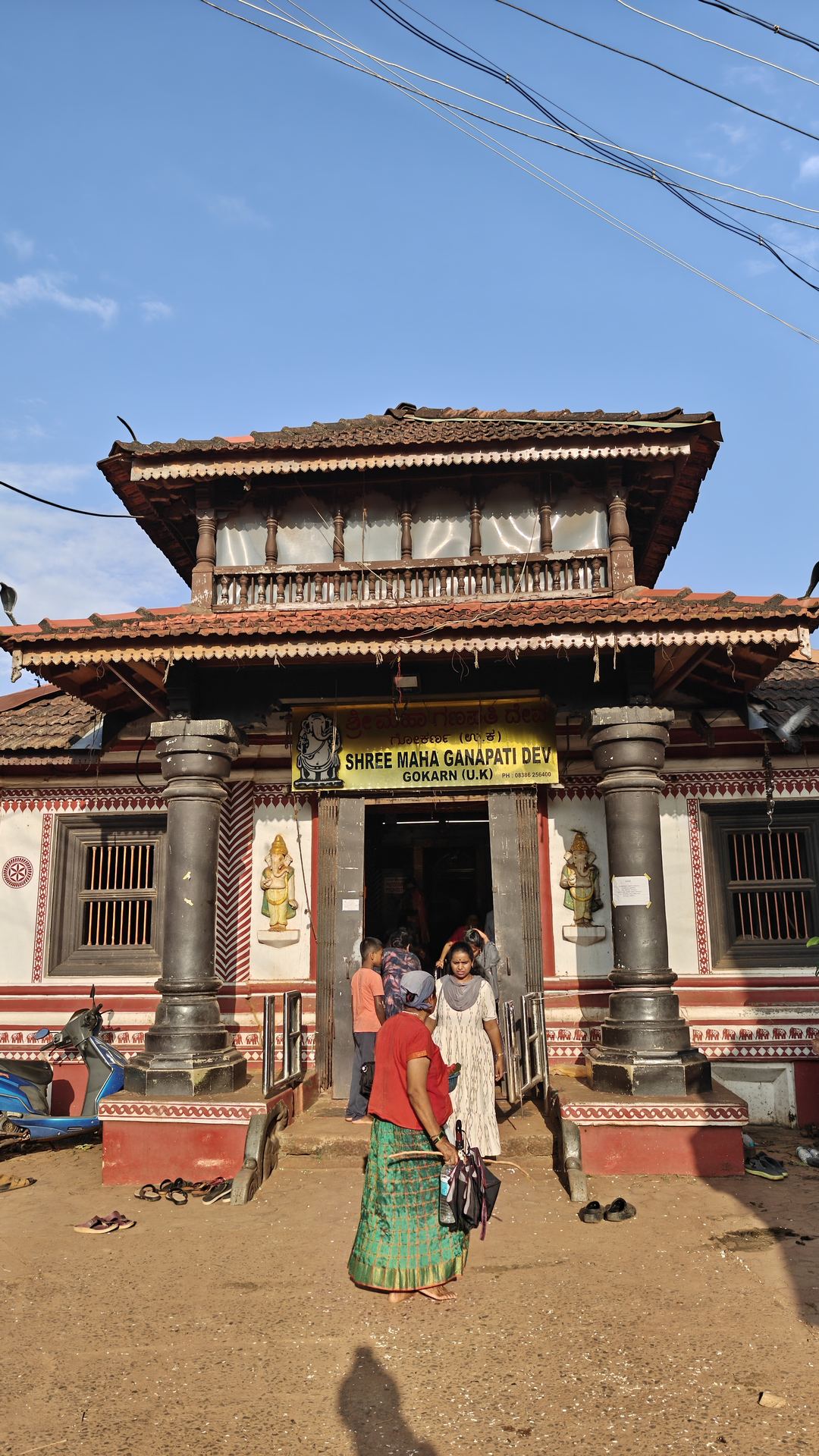
Mahaganpati Temple, Gokarna
A short walk away is Mahaganpati Temple, dedicated to the Ganesha who (in the same legend) tricked Ravana in the first place — making the two temples a kind of two-part story you visit in sequence rather than two unrelated stops. It’s a smaller, quieter shrine, and a nice contrast after the crowds at Mahabaleshwar.
The lane connecting the two is lined with small spice shops, and they’re worth slowing down for — sacks of local pepper, cardamom, dried kokum, and cashew varieties you won’t find packaged the same way back home. We spent longer here than planned, and didn’t regret it.
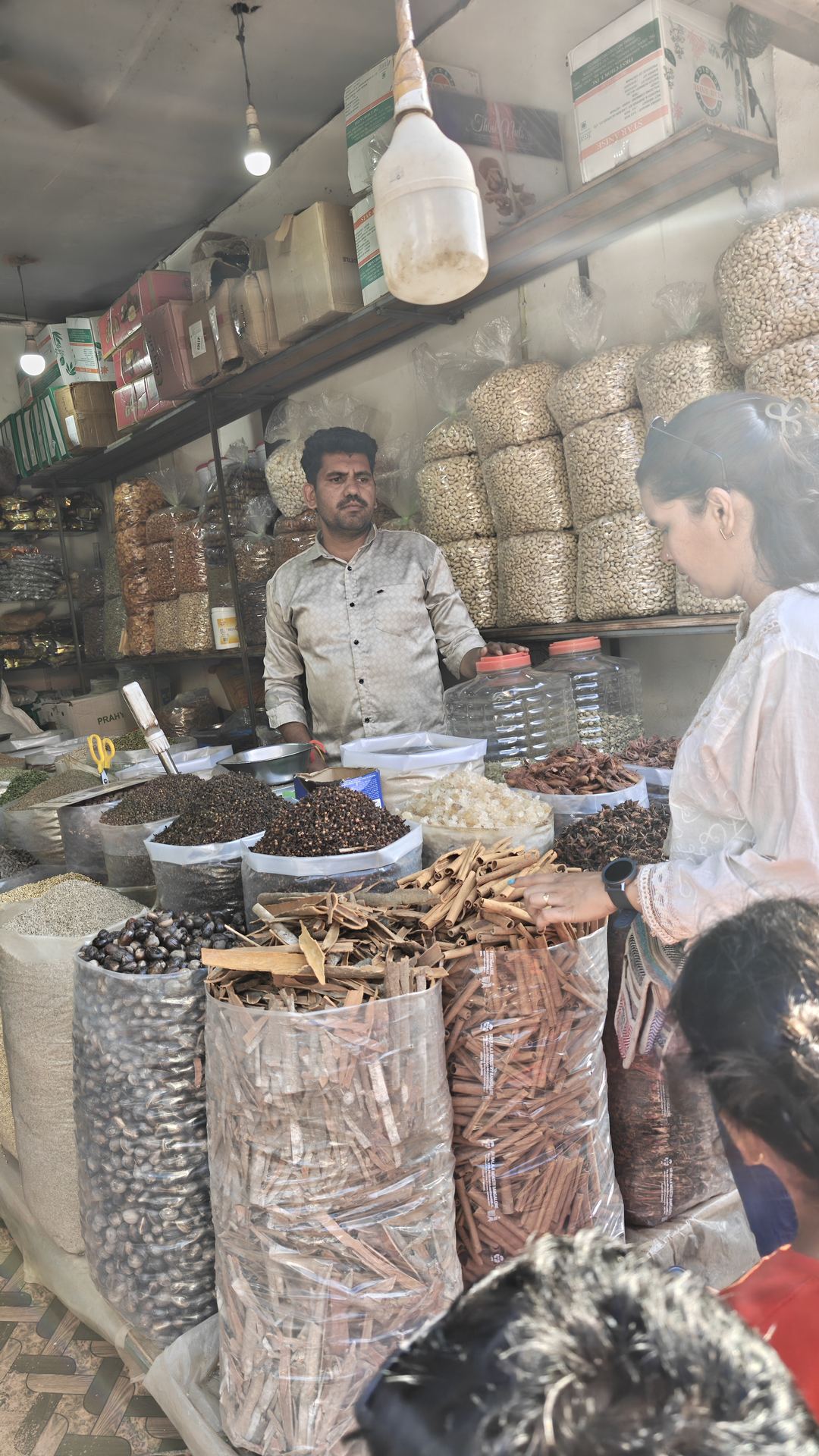
Spice shops on the lane to Mahabaleshwar Temple
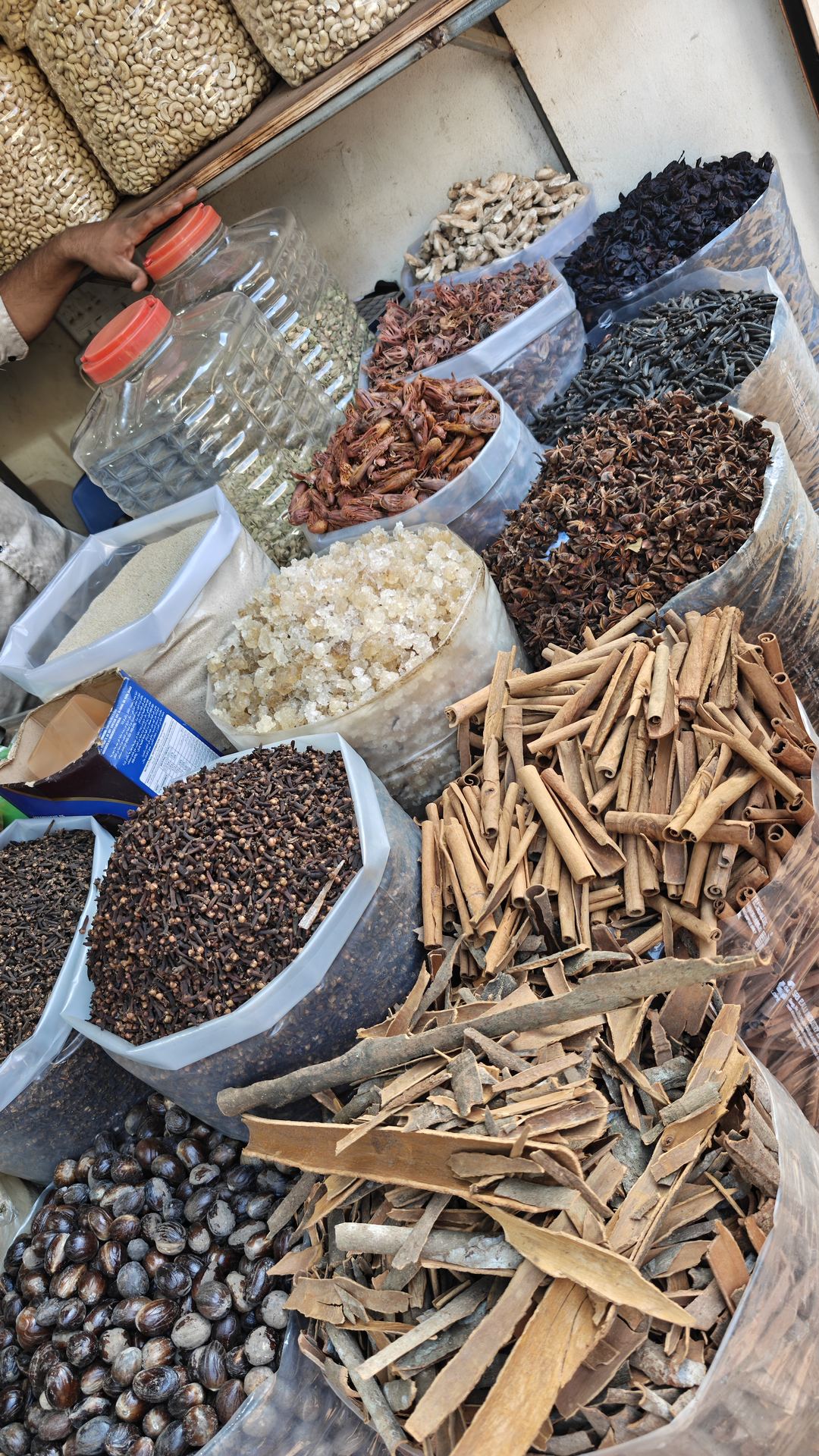
Sacks of local spices — pepper, cardamom, dried kokum
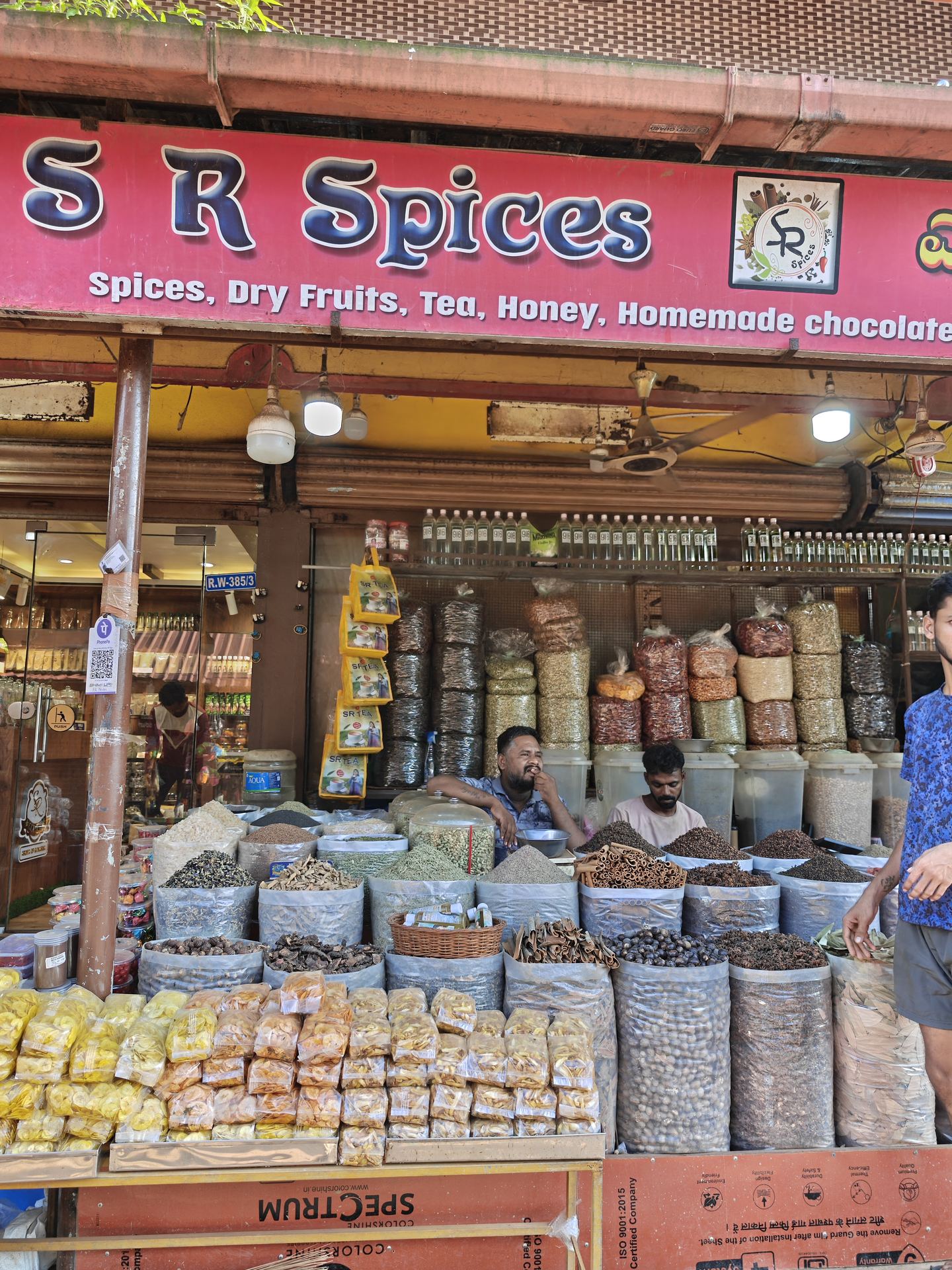
Spice shop interior, Gokarna
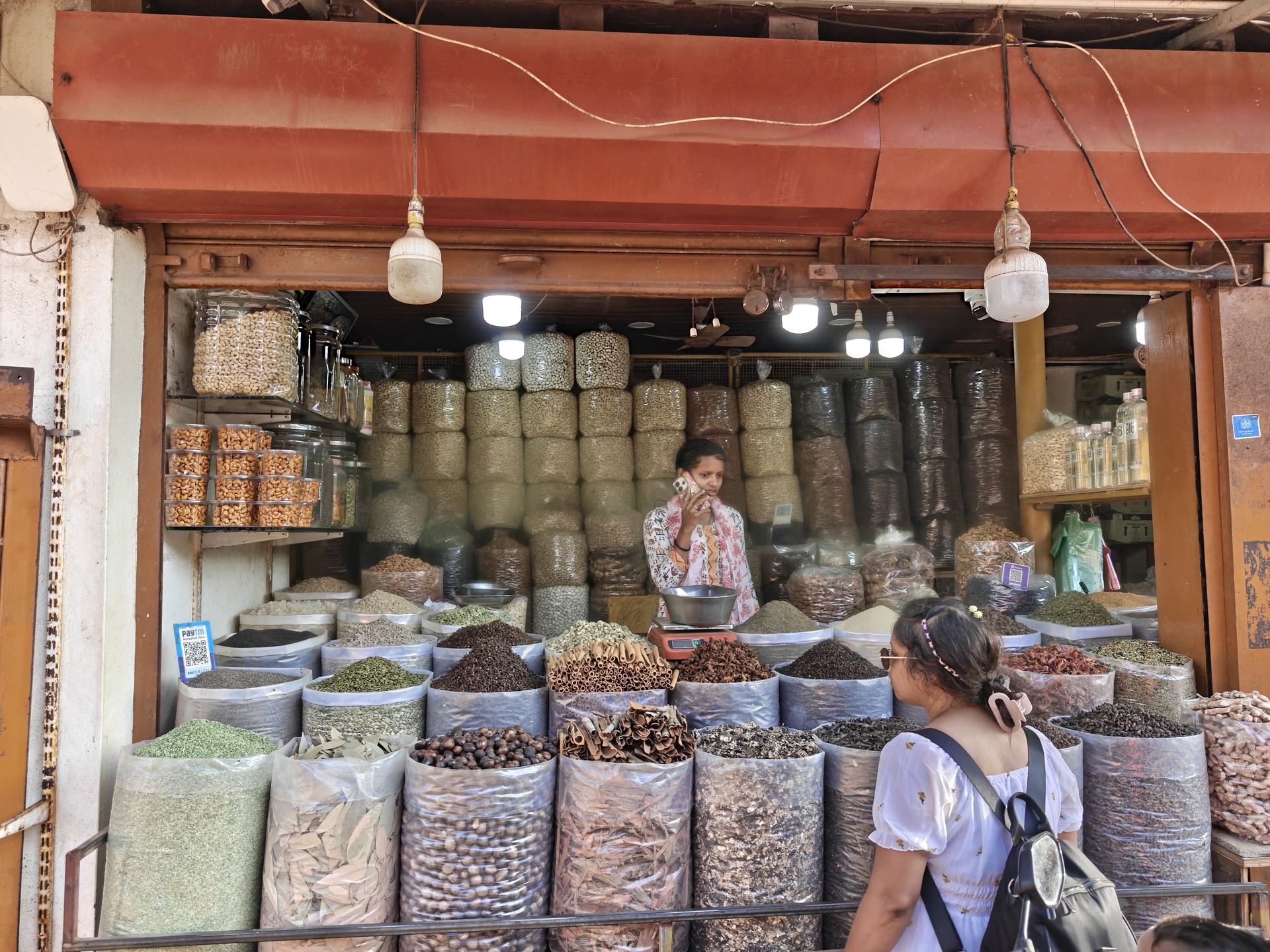
Weighing out cashews and spices for the road
- Sunset at Gokarna beach, then night stay at Gokarna.

Sunset over Gokarna beach
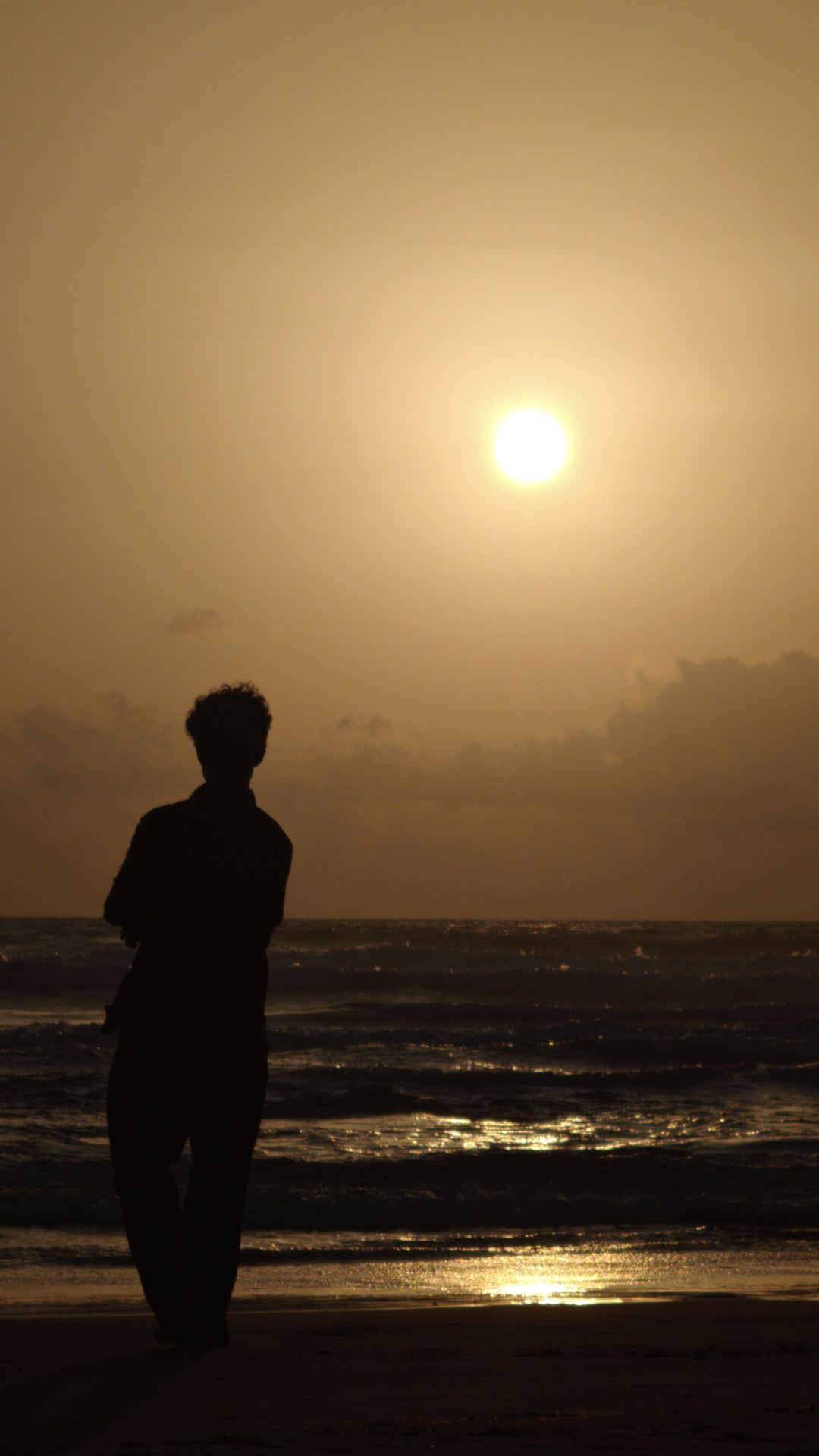
Gokarna beach, evening light
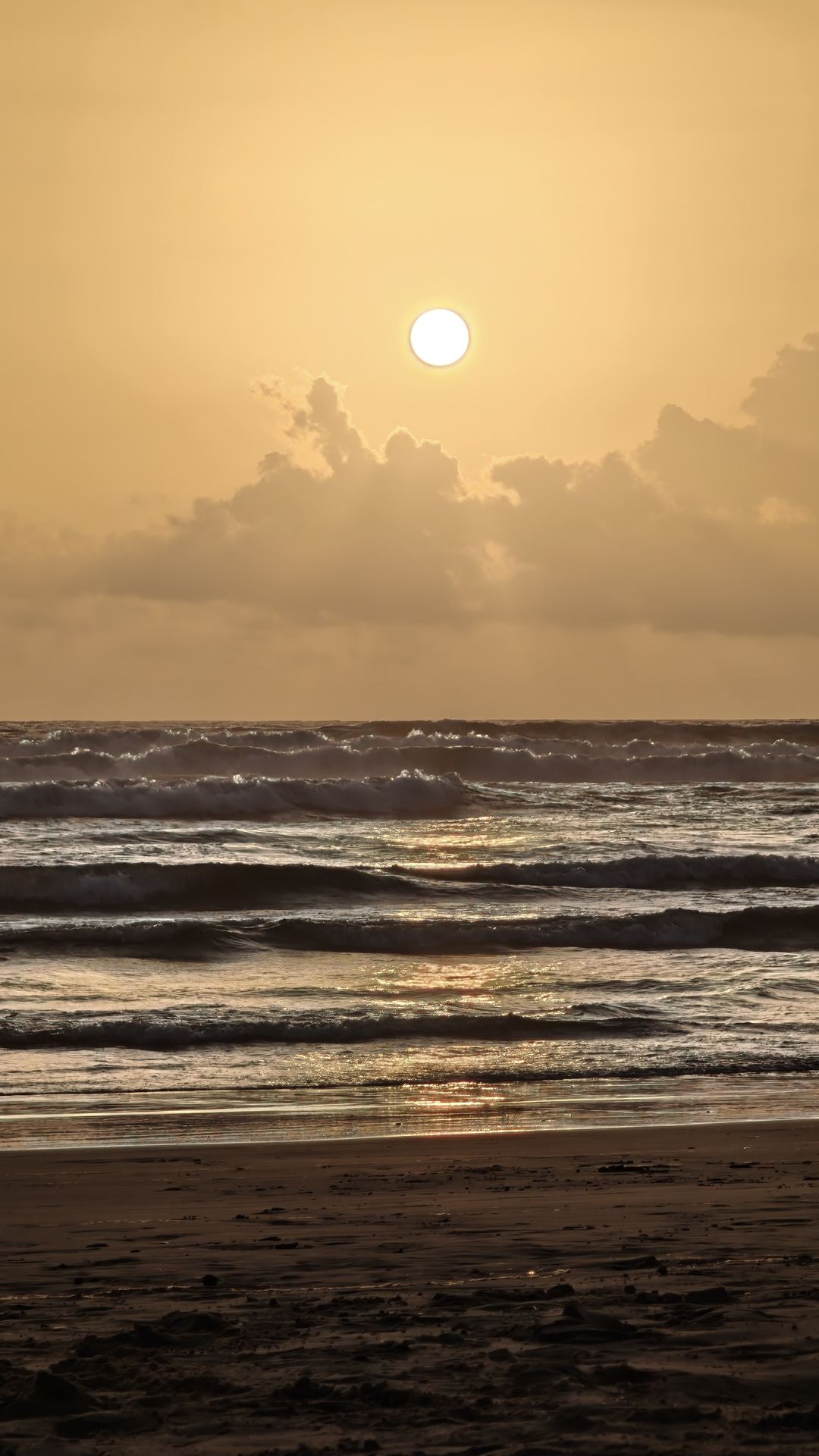
Waves rolling in as the sky turns orange
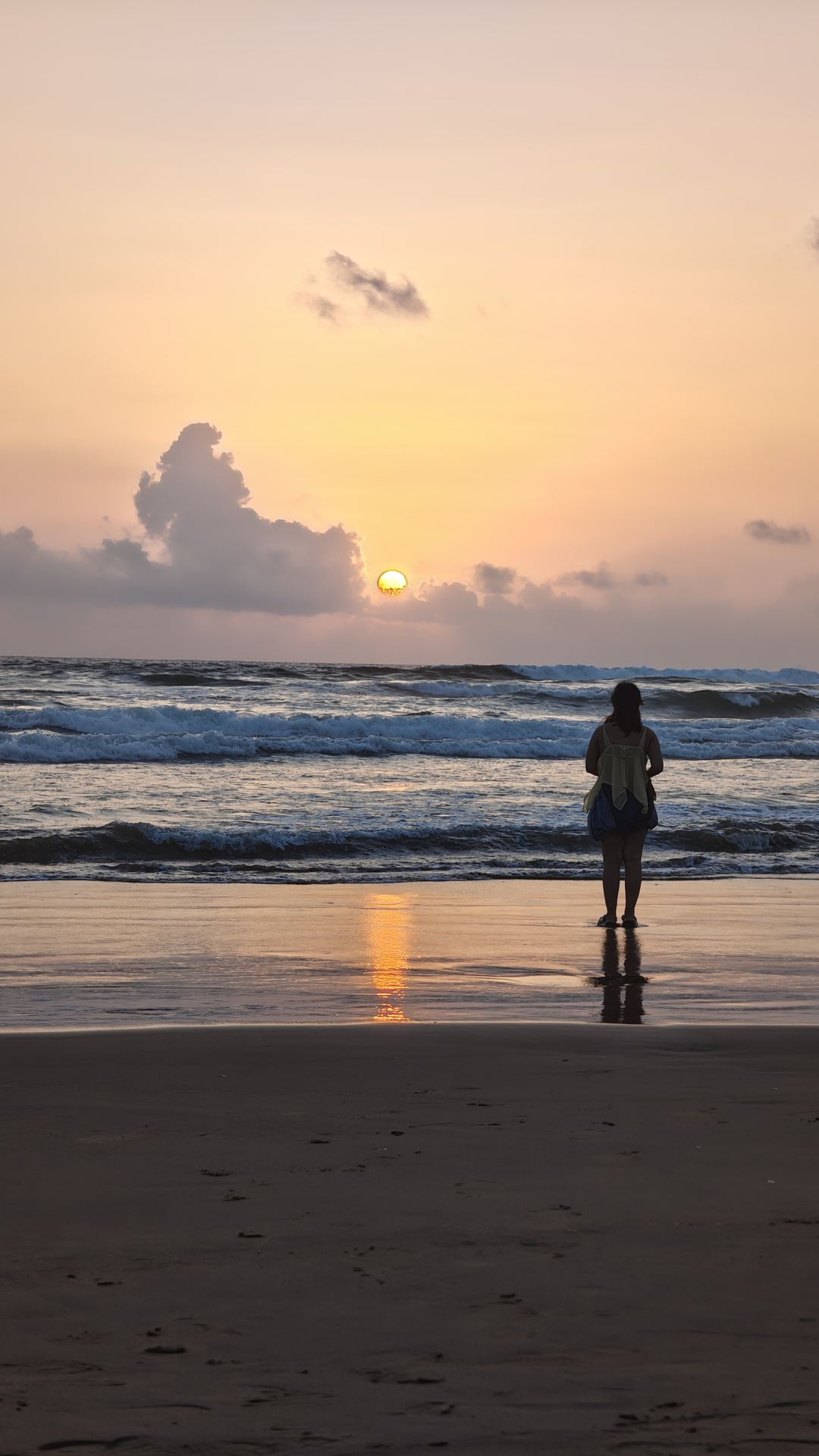
The shoreline at Gokarna, just before dark
Day 3: Mirjan Fort, Murudeshwar, Honnavar mangroves, Jog Falls
This was the long day — five stops packed into about twelve hours on the road.
- 6:25 AM — left Gokarna for Murudeshwar.
- 7:20–7:45 AM — quick stop at Mirjan Fort.
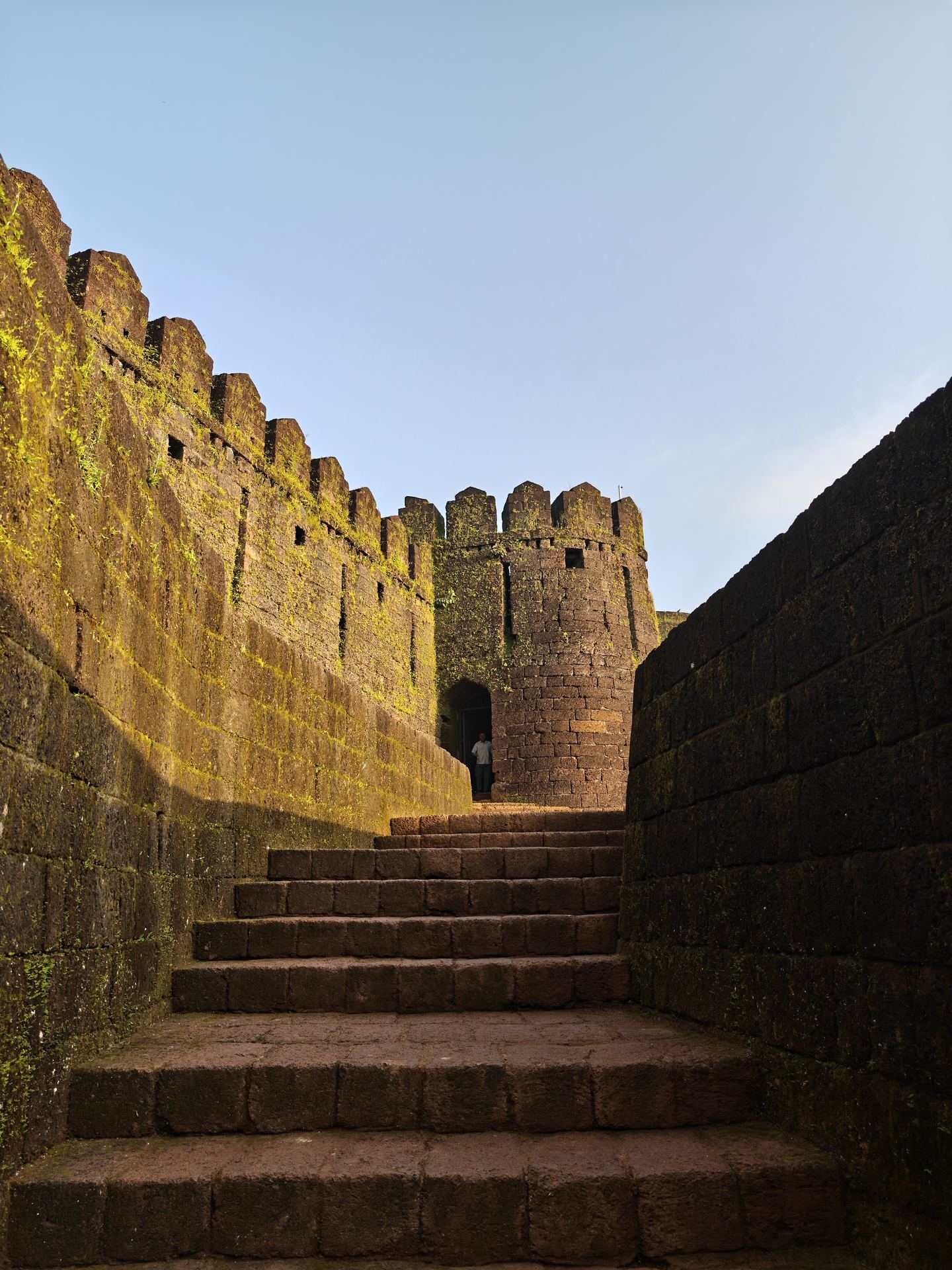
Mirjan Fort, en route to Murudeshwar
Mirjan Fort is a 16th-century laterite fort built under Queen Chennabhairadevi, who ruled the region for over five decades and was known to European traders of the time as the “Pepper Queen” — Mirjan sat on a key inland waterway that moved black pepper from the Western Ghats out to Portuguese and other European trading ships on the coast. What’s left today is a quiet, moss-covered set of ramparts and gateways, easy to miss if you’re not looking for it, but a reminder that this coastline was a serious commercial hub centuries before anyone came here for the beaches.
- 8:15–8:50 AM — breakfast.
- 8:50–9:27 AM — drove on to Murudeshwar.
- 9:30–11:10 AM — Murudeshwar Temple, including the giant Shiva statue and the Raja Gopuram.
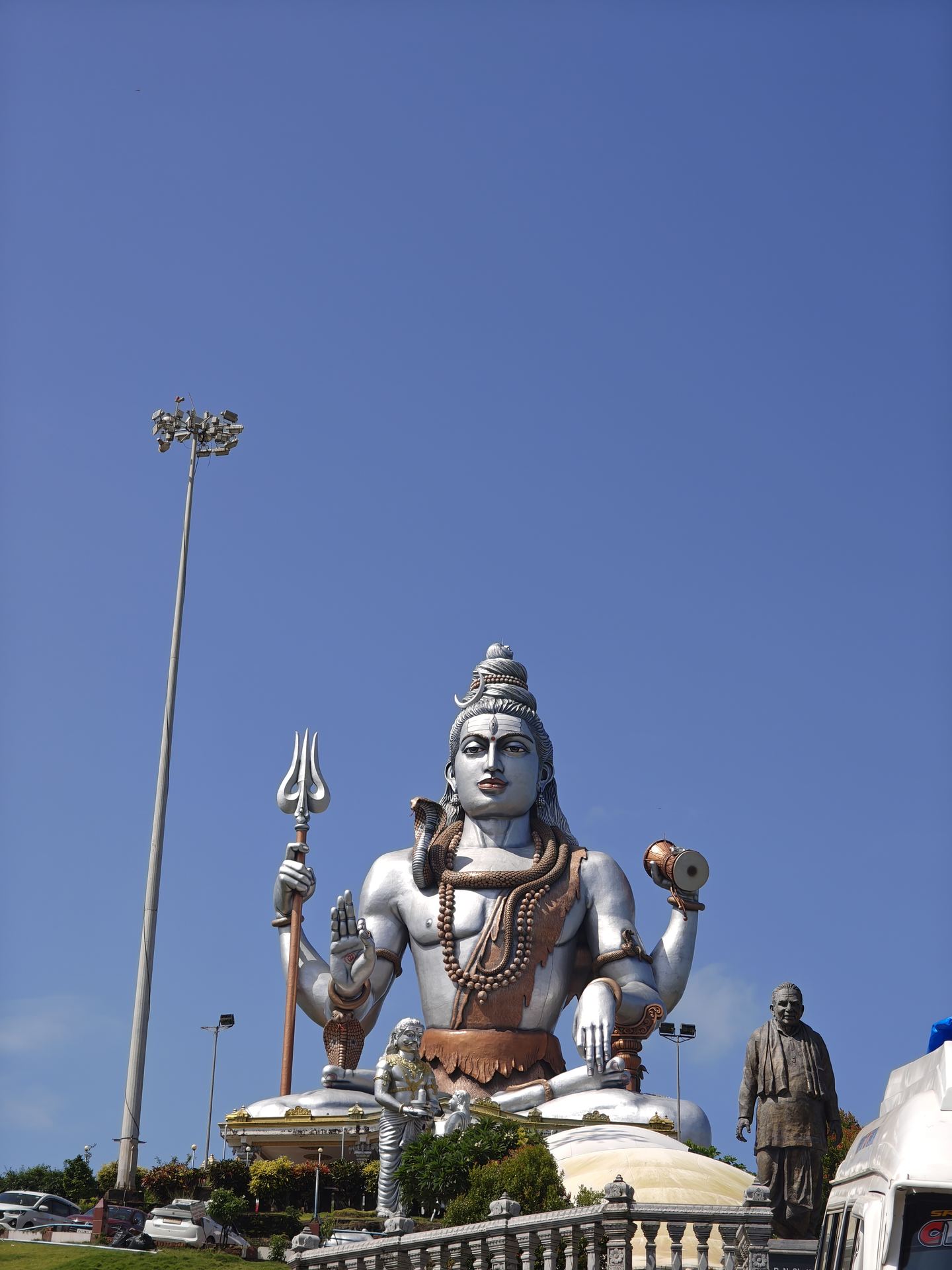
The Shiva statue at Murudeshwar, facing the Arabian Sea
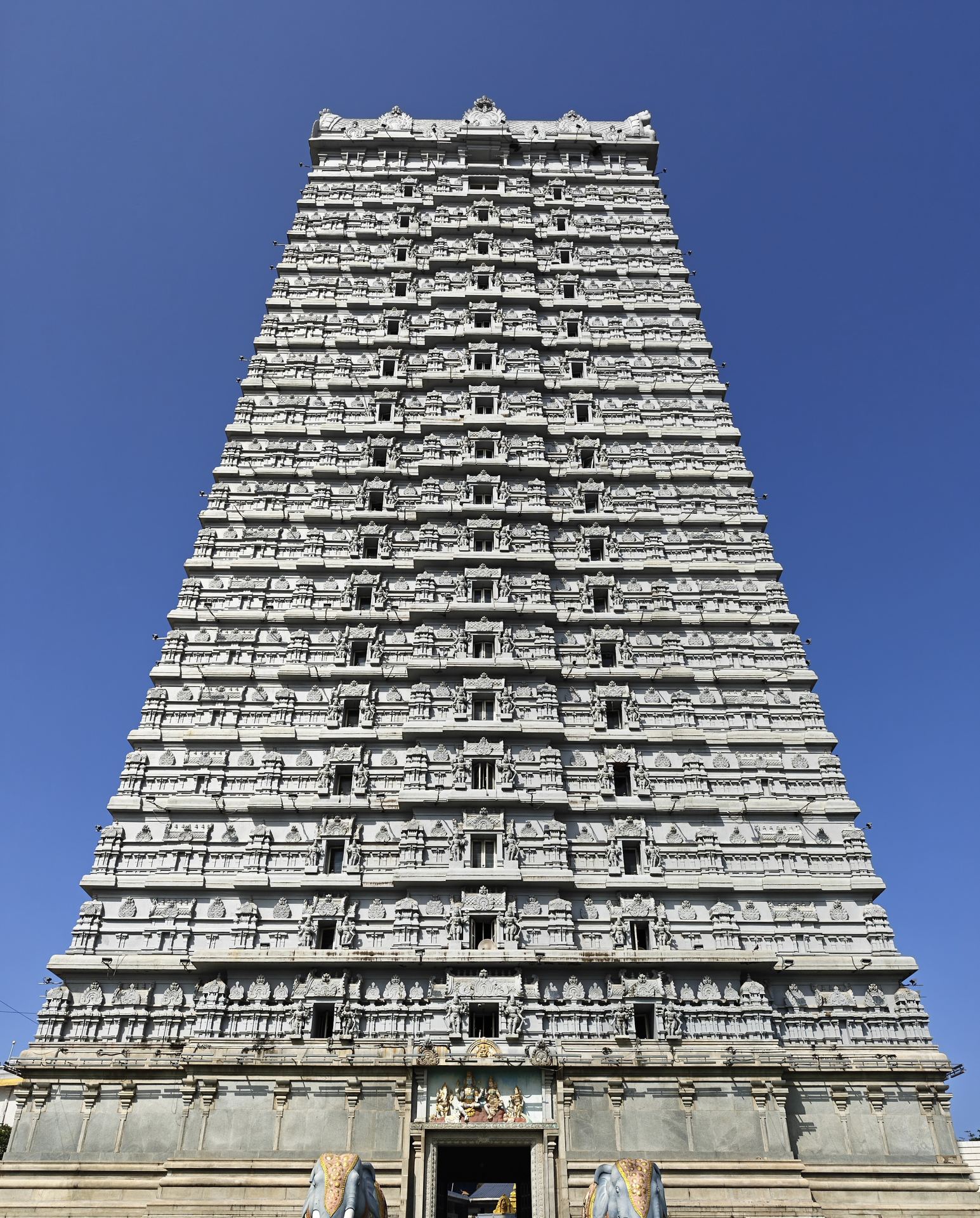
Raja Gopuram, Murudeshwar Temple
The temple itself is old — local tradition ties Murudeshwar into the same Atmalinga story as Gokarna, with the cloth cover Ganesha peeled off the lingam said to have landed here, which is why the hillock is called Kanduka Giri and the rock formations offshore are known as Ghosts of Ravana. But the two things everyone actually photographs — the 123-foot Shiva statue and the 20-storey Raja Gopuram — said to be the tallest Hindu temple tower (gopura) in the world at the time it was built — are thoroughly modern. Both were commissioned by the late industrialist R. N. Shetty and built between the late 1990s and mid-2000s, the statue completed around 2008. So the temple is ancient, the skyline is brand new, and somehow the two don’t clash at all standing on the beach looking up at it.
- 11:10–11:45 AM — drove to Honnavar for the mangrove boardwalk.
- Honnavar mangrove boardwalk, about an hour.
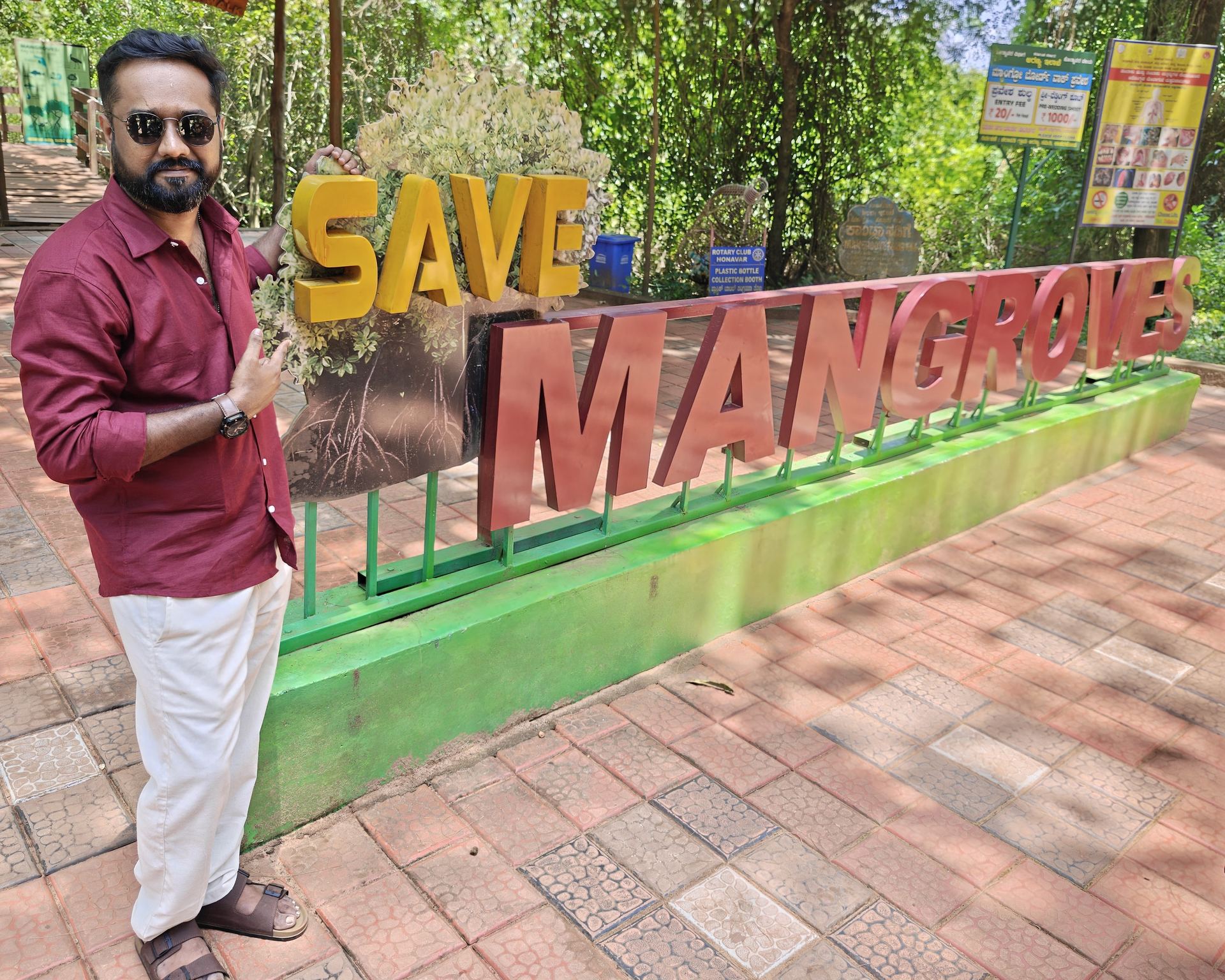
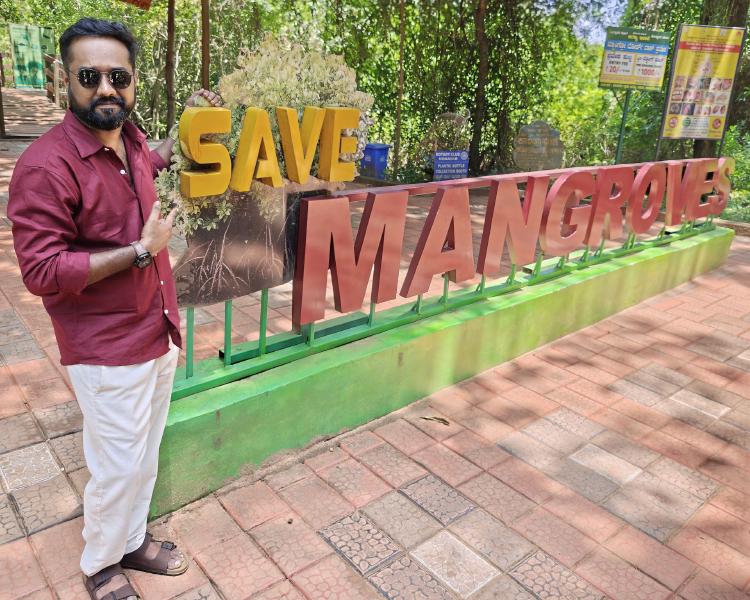
At the entrance to the Honnavar mangrove boardwalk
Another aside, since I spend my working life thinking about this stuff: mangroves like these, along the Sharavathi estuary, punch far above their weight ecologically. Acre for acre, mangrove soil stores several times more carbon than a tropical rainforest — mostly locked in waterlogged sediment where it barely decomposes, sometimes for centuries, which is why scientists file it under “blue carbon” alongside seagrass meadows and salt marshes. They’re also the coast’s shock absorber: that tangle of roots you walk over on the boardwalk breaks the force of storm surges and cyclone winds before they reach the villages behind them, and it’s a nursery for the fish and crab larvae that the entire local fishing economy quietly depends on. None of that is visible from the boardwalk in the way a waterfall or a temple gopuram is — it just looks like a quiet walk through the trees — but it’s arguably doing more heavy lifting for the region than anything else on this itinerary.
- 1:00–1:25 PM — travelled towards Jog Falls.
- 1:25–2:30 PM — lunch.
- 2:30–4:30 PM — drove on to Jog Falls.
- Jog Falls, about 45 minutes at the viewpoint.
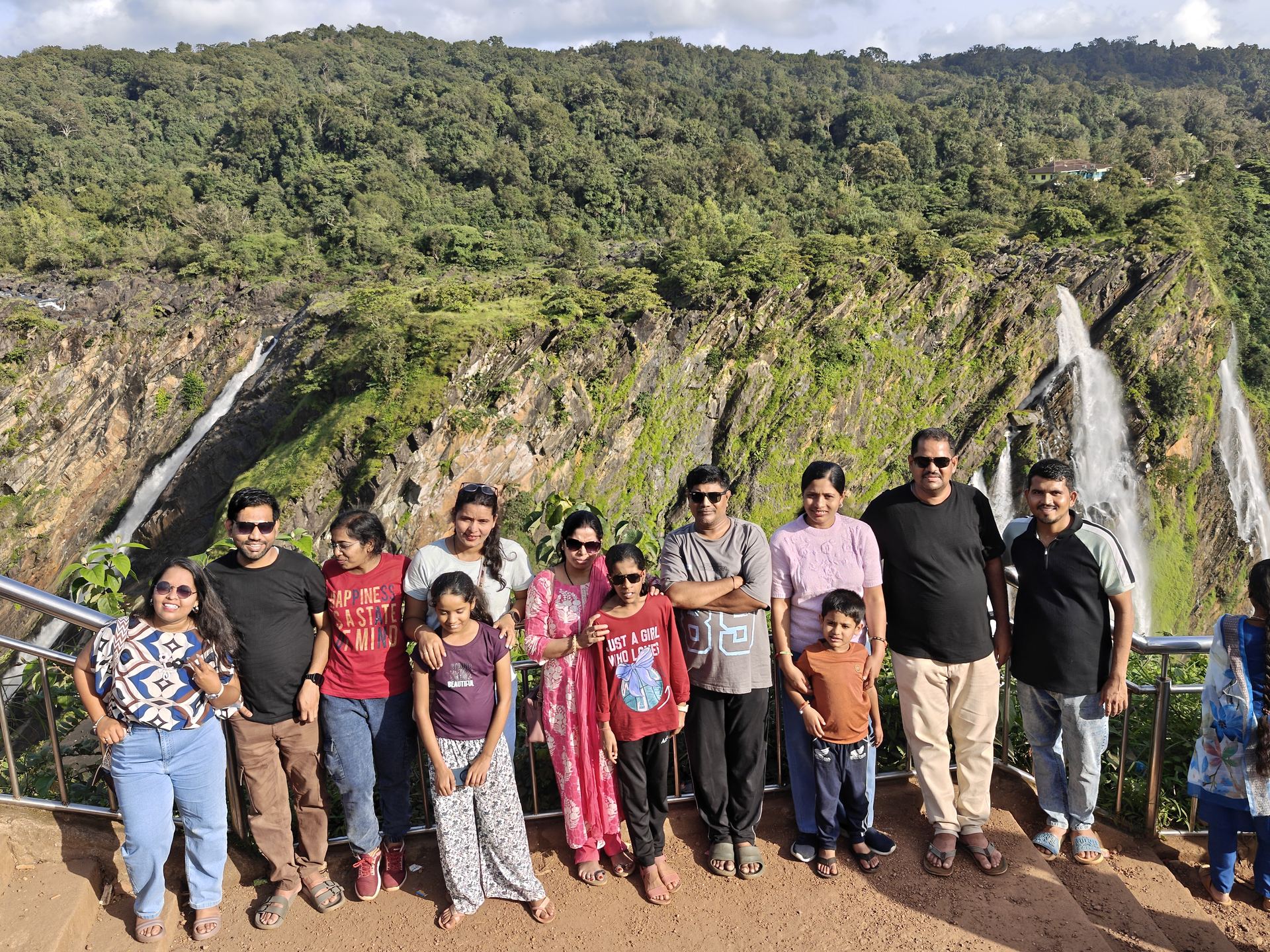
Jog Falls — four separate falls, side by side, dropping nearly 250 metres
What you’re actually looking at at Jog is the Sharavathi river dropping off a cliff in four distinct streams — Raja, Rani, Roarer and Rocket, each with its own personality — but how much water you see has less to do with rainfall that day than with a dam upstream. The Linganamakki reservoir, built for the Sharavathi hydroelectric project, holds most of the river back to generate power; the falls only get a full, thundering flow when the reservoir is released or overflowing during a strong monsoon. It’s a good, visible example of something climate scientists worry about more generally in the Western Ghats: as monsoon rainfall gets more erratic — fewer, more intense bursts instead of a steady season — reservoirs like Linganamakki have to make harder trade-offs between power generation, downstream water supply, and letting a river like this one actually run.
- 5:15 PM — started the drive back towards Pune.
- 8:16–9:26 PM — dinner at Coastal Crown Family Restaurant.
Day 4: Home
- 6:15 AM, 7th September — reached Swami Narayan Temple, Pune. Trip over.
What I’d do differently next time
Three nights compressed into what felt like one long push meant we were often looking at our watches instead of the view. If I planned this again:
- Two nights instead of one, spread more comfortably across Gokarna and the coast, instead of the one-night stay we managed this time.
- Climb to the top of the Raja Gopuram at Murudeshwar for the view over the temple complex and the sea — we admired it from ground level only.
- Boating at Honnavar — we only had time for the boardwalk; the boat rides along the Sharavathi backwaters looked worth the extra hour.
- Extend the return route through Kolhapur and Satara: a stop at the Kopeshwar Temple in Khidrapur (known for its unique open-roofed Swarga Mandapam) and the 12 Motechi Vihir stepwell near Satara would turn the drive back into sightseeing rather than just distance to cover.
Closing
What stays with me from this trip isn’t any single stop — it’s how little the places had in common, and how close together they all were. Ancient limestone spires older than the volcanic hills around them at Yana, a pepper queen’s fort at Mirjan, a temple whose sanctum is centuries old but whose skyline was built in my own lifetime at Murudeshwar, roots quietly holding an entire coastline together at Honnavar, a waterfall that turns on and off with a dam gate at Jog — all of it inside a sixty-hour loop from Pune and back. You don’t usually get geology, mythology, trade history, ecology, and modern engineering on the same itinerary, let alone the same bus.
We did it in one breathless push, four days end to end, and mostly through bus windows and short stops. It worked, but it also meant every place got less of us than it deserved. There’s a version of this trip — two nights instead of one, a boat on the Sharavathi, a climb up the gopuram, maybe a slow drive home through Kolhapur and Satara — where we’d come back having actually spent time somewhere instead of just having seen it. That’s the trip I’m already planning next.